The Gateman
This one is kind of a rant

Today, I am unable to let go of a thought that has plagued me for weeks (maybe months). If it sounds incoherent and raw, it’s because it is. And yes, I’ve noticed I have neglected the original theme and format for Act Two, but I think the newsletter is changing. And I will let it. For now, my writing is as sporadic and impulsive as my thoughts.
So, why don’t we care?
Two weeks ago, my building manager announced he was replacing the security guard. It was a long message, thick with authoritarian impulse. When I saw him two days later and questioned the abrupt change, he said that if I didn’t like it, I could move out.
His message about the guard change included this line: “The management does not advise any tenant to have any form of sentimental attachment to the security guards as they can be changed at anytime.”
He made a similar comment when I spoke to him in person. Visibly perturbed that I brought it up again. “Why do you people care so much about the security man?”
I guess my question is, why don’t you?
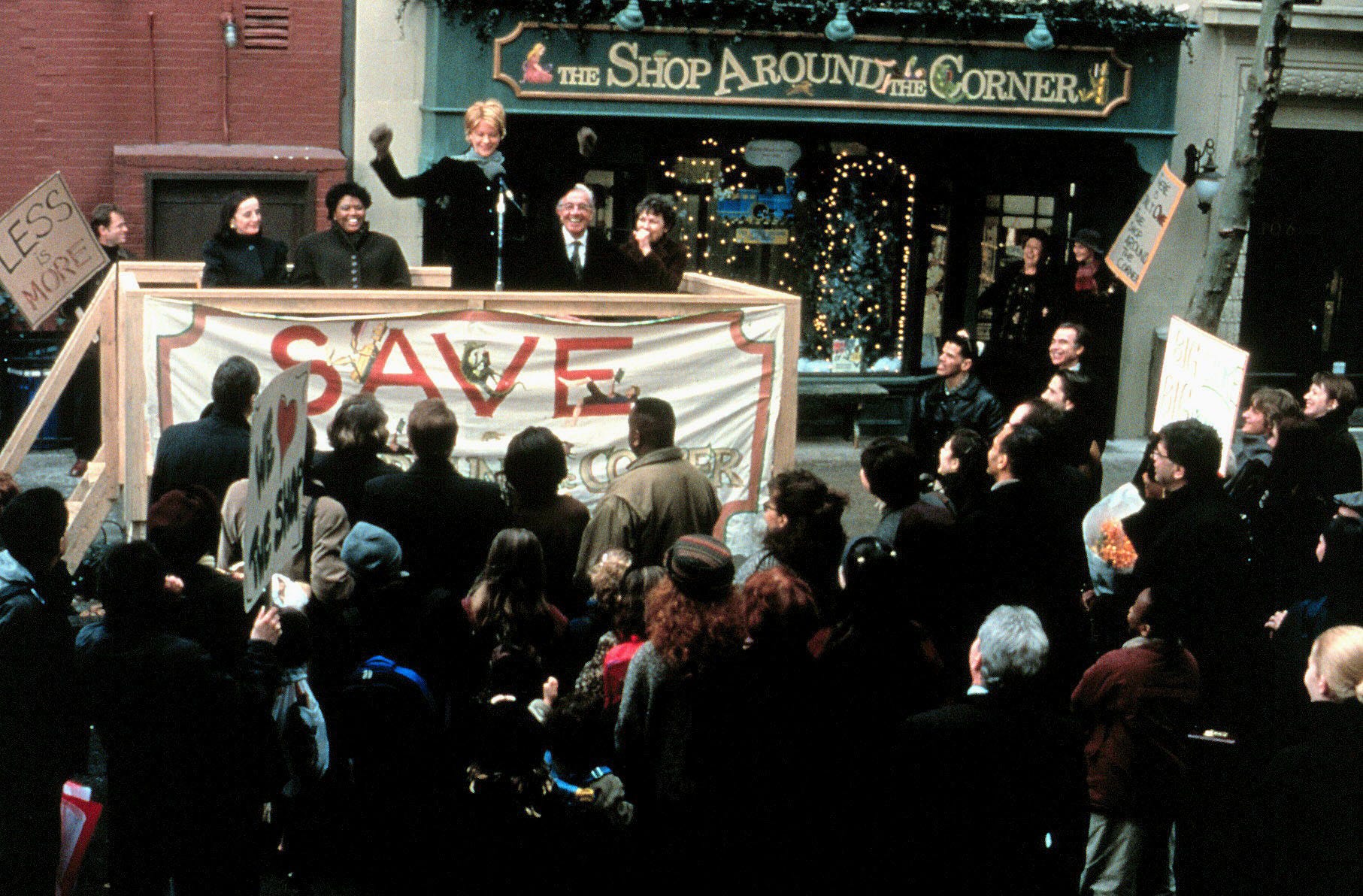
In one of my favourite movies of all time, You’ve Got Mail, Kathleen Kelly, who runs the small neighbourhood bookstore she inherited from her mother, finds herself in a turf war with a big chain that opens around the corner. (spoiler ahead)
It’s a dilemma bigger than her. She writes to her pen pal (who happens to be her rival Joe Fox, although neither of them knows it yet), asking for business advice. He tells her to go to the mattress.
“It’s not personal…. It’s business.”
Later in the movie, after the big chain wins and puts her out of business. After the two of them start to build a friendship in the ashes of their tussle. Joe Fox makes this weak attempt at apology and explanation.
Joe Fox (Tom Hanks): It wasn’t… personal.
Kathleen Kelly (Meg Ryan): What is that supposed to mean? I am so sick of that. All that means is that it wasn’t personal to you. But it was personal to me. It’s personal to a lot of people. And what’s so wrong with being personal, anyway?
Joe Fox: Uh, nothing.
Kathleen Kelly: Whatever else anything is, it ought to begin by being personal.
I remember having a conversation with my friend Ene early Last Year. She’d just started working with a housekeeper and was navigating the choice of a fair, livable wage.
This conversation stays with me now because a few months later, my position in it had shifted.
Nigeria is such an incredibly class-ridden society. It’s unspoken but clear that the country believes dignity is reserved only for people of a certain class. I think some of the evident loud ambition in Lagos is fueled by the knowledge that if you aren’t made, if you aren’t a big man, no one will treat you like you deserve anything at all. And when you have no other choice but to work domestic jobs, it’s like you are resigned to whatever dignity your employer decides for you.
A different friend told me how sad the negotiation with her own housekeeper made her.
“I knew where she lived and how far she had to travel to get to mine. She had children. I asked her to tell me how much she wanted, and that number made me so sad”
Ene had made a post on her story about wanting to offer dignified pay to her housekeeper. She wanted to show care, and I was sceptical.
Here’s the other thing about the class divide. When you understand that society will not give you anything, you learn to take because your life depends on it.
I still had a bitter taste in my mouth from an incident with my security guard from two years ago. Let’s call him Mahmud. He’d moved to Lagos from Niamey, Niger. Like most security guards in Lagos, his job wasn’t really to secure anything. It was to open the gate for residents, run small errands, and vet visitors. The day we let him go, we found out that he’d been stealing from everyone in the building to fuel a drug habit. He’d siphoned fuel from jerrycans and generators. He’d taken and sold someone’s old car tyres. He’d taken the money given to him to run errands and negotiated on credit, making up stories to the vendors about why the resident couldn’t pay yet. I think something that made the revelation bitter for me was noting all the instances of care I’d extended. My neighbours felt the same way. We all frequently gave him tips. One of us got him a smartphone. We’d all individually built the habit of including him in our meal plans. It felt like such a betrayal to learn that the entire time, he was also stealing from us. The morning he was let go, he’d been trying to sell the bed I gifted him.
There’s a saying, “familiarity breeds contempt”, or the Nigerian version, “overfamiliarity ends in insult.” It’s often the phrase tacked on at the end of a lesson to maintain strong social boundaries. Do not build a relationship with the person who works for you. Do not extend care. Do not be generous. It’s a lesson most people learn through experience. This was the source of my scepticism at Ene’s interest in care.
The abridged version of our conversation was this:
Ene’s position: certain kinds of behaviour, including petty theft, were symptoms of the neglected lower-income class. Our responsibility to these people was to actively confront the realities of their lives and (absolutely) pay them a truly fair, livable wage.
My position. Holding scepticism about our acts of care when met with acts of betrayal. In our pursuit to care for the people around us, there has to be a line that asks them to care for us, too.
I felt that some of Ene’s points about engaging with the realities of lower-income life felt too similar to a justification for negative action (this was not her point; another friend helped me see this). We ended at an impasse.

Last year, I was away from home for ten weeks. While I was gone, my security guard was changed again. Apparently, they discovered that the boy who replaced Mahmud had been helping the woman who swept the premises steal onions from one of my neighbours.
The new security guard, Silas (the one who was getting changed now), started working while I was away. When Silas started, he was timid and quiet. The way you are when your job feels like a favour. He seemed young, maybe in his early 20s. In the year since, he has grown more self-assured. He has made friends. On some slow Saturday afternoons, you’d catch him kicking a ball around with other people in the street. He got a new haircut every couple of months, the same cut as mine. A few weeks into working here, he started to call me every other Saturday, telling me about how he hadn’t eaten all day. He didn’t have money. I asked him how much the building manager paid him. 30 thousand naira a month (21 dollars), which kind of pissed me off. After a few weeks of sending him money, I asked him if he could cook. He said yes, and then the two of us devised a plan. If he could save enough money somehow to buy a small stove, I’d give him what else he needed to start cooking. A few weeks later, he called: “I’ve gotten a stove, but I don’t have a pot”. I gave him one of mine. The Saturday calls of ‘i haven’t eaten’ stopped after that. I remember one night seeing him cook noodles with one of his friends on the street and feeling kind of happy, you know.
I saw the woman who stole onions sometime in September. One person I’d met during my time travelling had said to me,
“We have a responsibility to build the cities we want to live in”
That sentence had changed my brain chemistry. While travelling, I had felt so many complicated feelings. I kept thinking of the place I came from and the place I was in now. I kept thinking of class and inequality. I kept thinking of the absence of true free will. Kept thinking of how much we ignored the people around us. Kept thinking of how this one person I worked for could go on expensive work lunches but couldn’t pay my (frankly low) salary on time. I was thinking of so many things.
And then I saw this woman, and she greeted me, and I greeted her back, and I thought back to the drama my neighbour had made about his stolen onions. And I thought to myself, “If I found out this woman was stealing my onions, I’d just fucking give. her onions.” That’s how I knew I had changed since Ene and I spoke.
I wrote about care in 2024 when I noted how it changed my approach to work. I work with the most caring people I’ve ever met. I sometimes feel overwhelmed by this. I am familiar with care in friendships, but from coworkers, that’s sort of new to me. In the past, at most, I built some camaraderie with my coworkers. In the last tech job I held, I worked for one of my friends who let me be part of the effort to build a work culture there, and that was one place where I felt effort made in the direction of care. But for the most part, in the few jobs I’ve had, it’s just been a job. You come in, and you are a person who meets deadlines or doesn’t.
How have you met your KPIs?
How have you maximised stakeholder interest?
And no one really cares that you are a real person because if they cared that you were a real person, they’d have to care that you had a real life, and real lives are complicated.
While coworking with a friend yesterday, they told me they’d just gotten a raise. Their boss sent a message saying, “Considering the UK’s changing policies around migrant workers, let’s push this person to a higher income bracket to help them navigate this”
They felt so cared for. Why is it so rare for people to feel cared for and to care for others at their jobs? Our jobs are such big parts of our lives.
I remember struggling at my job when I first started. To be honest, I think I’m always struggling. I remember being met with support and questions of ‘how can we help make this easier for you?’ I will let you know now that there is no more motivating reason for me than to know I am cared for.
My building manager changed the security guard because of ‘irreconcilable differences.’ I did not know what said difference were, most of my neighbours didn’t either. Silas, whom I still see around, didn’t either. The next day, we had yet another security change; we didn’t even have enough time to remember that guy’s name.
I don’t get it mahn. Why don’t we care? What’s so wrong with caring? Why does it have to be just business? I agree with Kathleen Kelly, whatever else anything is, it ought to begin by being personal.
I think this really comes down to balance and boundaries. Sometimes we care about people, but we end up caring too much, and we assume they care about us the same way or not. From a personal perspective, I’ve also had experiences with security guards, and for me it’s not about being heartless… it’s about knowing where to draw the line.
We can be good people, show care, and still set boundaries. Including people in our lives doesn’t mean getting overly attached. And it also shouldn’t invalidate the experiences of others who have been hurt or traumatized by people they cared about, including security personnel.
So yes, your rant and point of view are valid. Caring is good, but boundaries are necessary because we don’t always know people’s intentions. There has to be a balance where you can care without losing discernment.
You've Got Mail reference!!!!!
I absolutely adore that film>>>>